How Cerent Transformed Cisco
The Upstart Startup
  • Home
  • About
  • For Book Owners
  • Contact
  • Blog

Cerent’s Cast of Characters Held an IP + Optical Vision from the Start

3/30/2015

0 Comments

 
Cerent Corporation was founded in January 1997 in Petaluma, California, the heart of “Telecom Valley.”  The founders, management team, and staff of Cerent came from the leading telecommunications and data communications equipment manufacturers in the world.  Additionally, Cerent team members previously led successful new startup companies or possessed a track record of leadership success at established companies.

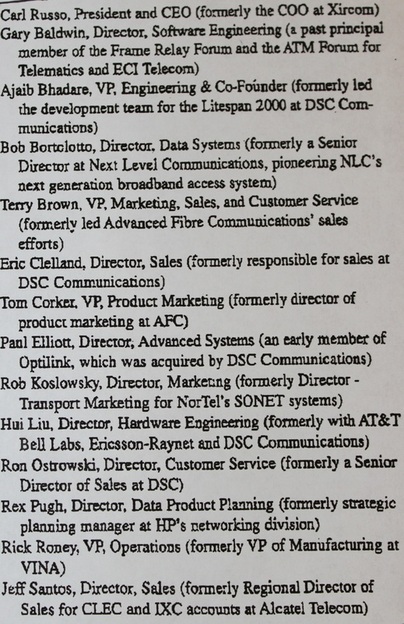
The following innovators were the key management personnel at Cerent at the start of 1999:
Picture
As of March 1999, the Cerent executive team in alphabetical order, as captured by Telecom Trends, courtesy of Pinestream Communications
The Cerent team was unique in that it integrated Optical Telephony (SONET) and Data Networking expertise. Not only did the Cerent team excel at tactics to win optical transport business, but the management team also articulated a vision that ultimately led to Cisco System’s IP + Optical initiative in the early 2000s.

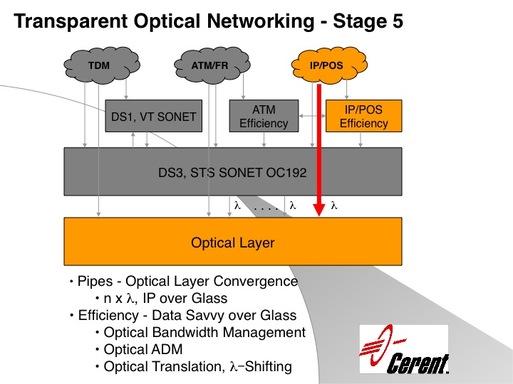
The slide below illustrates Cerent’s early five-step evolution plan for realizing an IP + Optical infrastructure, even as circuit-based switching solutions and ATM-based technologies dominated the late 1990s telecom marketplace.
Picture
Cerent’s early five-step evolution plan for realizing an IP + Optical infrastructure

0 Comments

Erina Kearney and Scott Messenger on Telecom Valley

3/23/2015

2 Comments

 
PictureErina Kearney (2nd from right), at holiday party, Silverado Country Club, Napa, circa 1999
There have been numerous spin offs, acquisitions, startups, and IPOs in Telecom Valley, many with ties to the original Optilink. (You can see a partial list below.) Optilink, founded by Don Green in 1987, is viewed to this day as the hub from which these telecom equipment vendors emerged to bolster the credibility of Telecom Valley as a high tech center for innovation.

In 2014, however, only Calix and Cyan remain as the telecom holdovers in the new millennium of Telecom Valley. Both private companies have gone public. This state of affairs exists after some fifty years of DLC and fiber optics systems development around the world. Although only a few companies survived the dot.com bust and the telecom meltdown of 2001 and 2003, respectively, other companies slowly closed down or moved away from the Petaluma area. Cerent’s acquirer, Cisco Systems, for example, chose to leverage its Monza, Italy optical center and its Bangalore, India software center to develop optical transport gear. Cisco slowly transferred or released some 1,000 employees and closed about thirteen buildings as it withdrew from Telecom Valley in the early 2000s.

The legacy of Telecom Valley with its many wealthy individuals and remaining high-tech companies have now become part of the fabric of Sonoma County, a valley that persists with Don Green viewed as its father. It just needs a “shot in the arm” to return to its early days of glory.

Erina Kearney, a former human resources specialist at Cerent, is optimistic, “I'm so happy to be back in the North Bay! I'm definitely missing working in tech, however, I hope that someday soon there will be more opportunities up here for that kind of work.” Erina recently moved back from the South Bay where the “tech jobs were a dime a dozen.” The calling to return home to Sonoma County was irresistible. She adds, “To get back home I switched to the Senior Living Industry. It's hard to work in a new area after the fun times at Cerent and then I spent 5 years at another exciting start-up.”

While many left Telecom Valley after the crash of the industry (and some returned), others stayed put. Carl Russo, for example, became the CEO of those Cerent rebels based in Petaluma. He liked what he saw in Telecom Valley in 1998 and joined. He could not deny the pull of the team’s energy and passion to build something special during that hectic time. Carl remains working in Petaluma to this day as the CEO of Calix.

But the world is changing, and not for the better for Telecom Valley. There appears to be a move towards what some call “new company structures.” Scott Messenger, Cerent’s ‘454’ product manager, observes, “Large companies are turning to many-geographies to get the same job done that we once did in one location. There is still a core site strategy in many of these companies, but they are so much more centralized around big cities, big development centers such as Silicon Valley, Frankfurt . . . and more.”

Picture
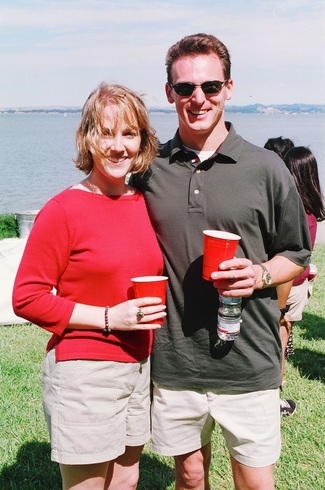
Scott Messenger with his wife, a former Nortel employee, at the Cerent company picnic, circa summer 1999
It’s up to those that remain in Sonoma County to come up with the “next big thing” and reinvigorate the northern high-tech Valley.
-----  -----  -----  -----  -----  -----  -----
“The list” of innovators, past and present, includes: Advanced Fibre Communications, Calix, Cyan, Diamond Lane Communications, Dilithium Networks, Enphase Energy (an energy startup with deep telecom roots), Fiberlane and Cerent, Fibex Systems, Mahi Networks, Next Level Communications, Teknovus, Telenetworks, Turin Networks, and many others. 


2 Comments

SpaceX and Cerent - A Comparison

3/17/2015

0 Comments

 
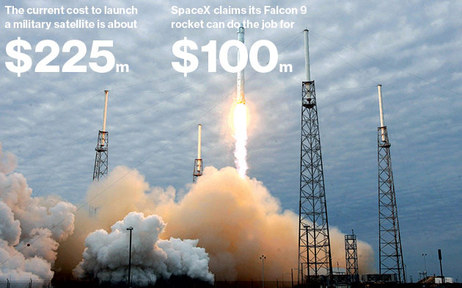
Displaced in time, the current SpaceX valuation of $10B is identical to Cerent’s 1999 valuation of $10B, when the privately held optical transport company was toying with going public or being acquired. The recently announced Google-Fidelity investment of $1B represents a 10 percent stake in SpaceX.

In another striking parallel between SpaceX of 2015 and Cerent of 1999 is the objective of improving Internet access. Elon Musk, CEO of SpaceX, has been publicly promoting the use of satellites to deliver Internet capability to remote regions of our planet.

Just 16 years ago, Cerent’s CEO Carl Russo, described how the Cerent 454 product provided the capacity and connectivity across metropolitan networks to improve Internet access for all PC users, while still maintaining high quality voice traffic.

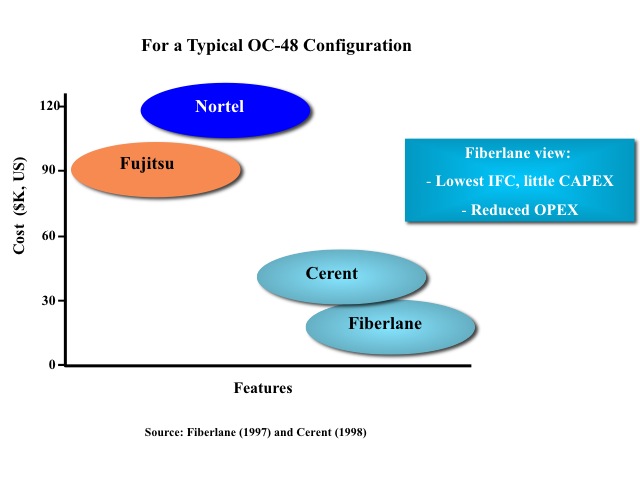
Cost to customers is paramount in their decision-making on which technology to use. Just like NASA and other potential customers hope to see the costs of launching payloads into space cut in half, service providers of the late 1990s/early 2000s enjoyed the costs of optical transport being halved by deploying Cerent’s pioneering MSPP, the Cerent 454. 
Picture
Image courtesy of Red Huber/Orlando Sentinel/MCT/Getty Images
Picture
Image courtesy R.K. Koslowsky, "The Upstart Startup," Part 5 - Breaking the Bandwidth Bottleneck
Big and bold ideas appear to be valued at $10 billion, regardless of the decade in which they appear, just be sure to have the product functionality AND economics right. 

0 Comments

2015 - The Year of the Next Tech Bubble?

3/9/2015

0 Comments

 
More than 15 years after the dot.com crash of early 2000, familiar signs of an impending tech crash are popping up. Veterans of the last crash see these signs, but the question is whether today’s young entrepreneurs, who were just leaving middle school back then, see them.
Picture
Does a bubble universe exist in Silicon Valley? Will Silicon Valley can keep its reputation for “vanity, bubbles, genius and excess” unscathed? Image courtesy Dr. Anthony Aguirre.
The warning signs are everywhere. Office space in Silicon Valley is becoming so expensive that only tech firms can afford to pay the outrageous prices per square foot. Banks and law firms are being forced out of downtown San Francisco. In December 2014, The Economist reported, “. . . All of the space in eight tower blocks being built [there] has been taken by technology firms.”

Janet Yellen, the head of the Federal Reserve, has warned that social-media firms are overvalued. Her words of caution have been largely ignored, just as her predecessor Alan Greenspan was disregarded when he urged caution over telecom investments in 1999. Greenspan said, “But how do we know when irrational exuberance has unduly escalated asset values . . .?”

It seems that we don’t know until some market crash arrives. Overinvestment, in social media today, as it occurred in telecommunications in the late 1990s, however, eventually has the effect of depressing prices and profits for everyone participating in their sector of the industry. As Lisa Endlich wrote in Optical Illusions, “This is a particularly insidious and dangerous condition, and one that is immune to the Fed’s traditional medicines. The usual mechanisms of stimulating growth do not work under these conditions. No reduction in interest rates, no matter how substantial, will induce investors to return to an industry already drowning in excess capacity, and by extensions, insufficient demand.”

During these exuberant times when capital is being thrown at an industry the Federal Reserve is usually forced into making a decision. Either such investment leads to a sustainable rise in the rate of productivity growth, thus altering the long-term growth rate of the economy, which is a good thing, or it leads to over-investment and over-capacity as the telecom industry experienced in early 2000 with millions of miles of unused optical fiber (dark fiber) in the ground, which is a bad thing.

Today, the Federal Reserve is wrestling with the same issue around emergent young companies where good corporate governance is not a priority. The Economist wrote, “Shares in Alibaba, a Chinese [I]nternet giant that listed in New York in September using a Byzantine legal structure, have risen by 58%. Executives at startups, such as Uber, a taxi-hailing service, exhibit a mighty hubris.”

But maybe this is not such a big problem today . . . Observations of financial excess are generally invisible for two reasons. First, big tech firms such as Amazon and Google, which are spending massive sums on warehouses, offices, people, machinery and buying other firms, are using their own cash flow to do so. Second, it is the booming private markets where venture capital firms and other interested parties assume positions in young technology companies. If a firm fails, the shareholders or VCs lose out, not the general public so much.

By the end of 1999, Allan Greenspan and the Fed’s policy decisions supported an overinvestment boom unparalleled in history. If history is repeating itself today, then Janet Yellen and the Fed’s current policies may be shielded by the concentrated wealth of the firms and investors that finance any potential failing startups or mismanaged larger public companies. Any downturn, as The Economist reports, “. . . would be confined to private markets and a few large firms with strong balance-sheets.”

For the average small investor in the stock market, there seems little to worry about. Today’s startups and tech giants, just as they did in the late 1990s, create jobs and invest in new technologies and infrastructure that boost long-term economic growth. And with little fear of another “bust” affecting the average investor, Silicon Valley can keep its reputation for “vanity, bubbles, genius and excess” unscathed.

Could this be a more benevolent Silicon Valley in 2015? Time will tell. In the meantime, under-utilized dark fiber assets are becoming more valuable. 

UPDATE 1:
Cheap capital is fueling much spending in order for startups to capture market share growth. It’s a déjà vu moment as this situation existed in 1999 and early 2000, right before the dot.com bust . . . 

“Right now money is certainly chasing growth. It’s not totally blind growth. [Startups] do care about unit math and retention, but growth is certainly the most important factor.”
--Brian O’Malley, partner at VC firm Accel, WSJ, December 2014

"Are we creating a generation of companies whose behavior has been poisoned by easy capital?"
--Peter Fenton, partner at Benchmark, WSJ, December 2014

UPDATE 2:
Record heights were achieved in 2014 for tech startup valuations. The worth of startups grew at incredible rates last year, even when compared with the “irrational exuberance” of the late 1990s.

Venture capitalists, big banks, and mutual funds assigned valuations of at least $1 billion on more than 40 startups around the world in 2014, a metric more than double that of 2013.

The Wall Street Journal reported on December 30, 2014, “Adjusted for inflation, the current roster of 70 'billion dollar' startups globally is nearly twice as large as the number during the boom years 1999 and 2000." 

It is the participation of big banks and mutual funds that are bidding up startup valuations. Venture capitalists raised more than $32 billion in 2014, a total well below the inflation-adjusted $121 billion raised in 2000, according to Venture-Source. The concern expressed by many investment observers is that money is being thrown at startups “based on momentum instead of fundamentals.”

0 Comments

Infinera’s Fallon, Unlike Cisco, Says His Company Focuses on the Customer Experience

3/2/2015

0 Comments

 
Tom Fallon is Infinera’s Chief Executive Officer, a former employee of Cisco when it was in startup mode. As a follow-up to the release of my book, The Upstart Startup: How Cerent Transformed Cisco, we talked about a couple of things surrounding packet-optical transport in a new light.

Picture
Tom Fallon, courtesy Infinera
Rob Koslowsky: “How does ‘Innovation continually re-invent Infinera’ today, in keeping with how Cerent transformed Cisco in the early 2000s?”

Tom Fallon: “I don’t think we’re reinventing. We’ve approached this a little bit like Cerent from one perspective. You guys used to always hype ‘simple, fast and easy,’ in terms of the customer experience. Today we call it ‘the Infinera experience’ and it’s a combination of technology innovation, excellent operational execution, high quality, and intense customer support.”

“I think that’s part of our DNA, I think it was’s part of Cerent’s DNA. I don’t believe it really transformed Cisco into that DNA, however, because I still don’t think they think holistically about the customer experience. They might think they do, but they really don’t.”

“We’re trying to take our core technology and the success we’ve created in a specific market space and adapting that to transcend into adjacent market spaces . . . We’re going to evolve our product portfolio by integrating packet capabilities and SDN capabilities, bringing out new products optimized by market feedback and notching up what the definition of transport companies have historically been.”

“From the perspective of customer experience focus, Cerent and Infinera have a lot of parallels. I’m not convinced we are creating a transformation in our company or reinventing our company. I think we’re evolving our company. There is a pretty significant difference in my mind.”

Rob Koslowsky: “Infinera’s recently announced move to enter the metro transport space produced a déjà vu moment for me. Your strategy is reminiscent of Ciena’s 1999 attempt to expand from long-haul to metro, when that long-haul innovator failed to do so with its acquisition of Cyras. Acquisitions are often a great way to achieve continued organic growth. Why did you choose to develop a metro transport product internally versus acquiring a company to fill this need?”

Tom Fallon: “We are moving into two different metro markets – the first is metro cloud often referred to as data center interconnect and driven by the large Internet content providers. The second is the metro aggregation market, which is the more traditional metro market driven by telcos and cable operators. I’m not opposed to acquiring, but all the core technologies that we have in our current long-haul market and all the customer experience around ‘simple, fast, and easy,’ to use the terms of Cerent, are applicable in these adjacent markets. We don’t have to get a new trick; we don’t have to get a new DNA; we don’t have to have a different customer experience. We have to leverage a customer experience and a competency we already have into a next-door opportunity. What our customers want is more of what we got in a package that solves a smaller scale problem.”

Rob Koslowsky: “Last year, media reports highlighted that Windstream (an early adopter of Cerent’s metro product when this national service provider was known as Alltel) was still using Cyan in the metro, but making a home for Infinera in the ‘long-haul portions’ of Windstream’s network. So Infinera’s push into the metro was a clearly telegraphed message to its competitors that it was pursuing an aggressive adjacent market strategy.”

Tom Fallon: “My belief is that, as we become very significant in our current market, make sure we’re profitable in that current market, and then take that bag of tricks into adjacent opportunities where you can start leveraging our investment across a broader market opportunity. If you go too broad, too fast, you don’t become great at something or a significant market-share holder to have influence. We now have 140+ customers and a big chunk of those are going to buy the next Infinera experience. It doesn’t mean we’re not interested in acquisitions, but our vertically integrated model results in product standards that are extremely high and so for the markets we’re bringing this technology to, there is not an acquisition that scratches that itch.”

Rob Koslowsky: “On the cloud and rise of Software-Defined Networking (SDN) . . .  Does SDN create a drag for your hardware sales momentum? It sure has dampened Cisco and Juniper’s high-margin sales lately.”

Tom Fallon: “SDN for us is an additive to our capability and I believe actually makes optical more strategic; it links the transport layer to a higher-level layer that consists of virtualized network functions. You can’t virtualize the creation and movement of photons. To send a photon from A to B, to transport it, you have to use our optical transport gear or someone else’s gear. Funadamentally, scalable optics becomes the foundation of next generation networks and because we have a PIC that uniquely provides an incredible amount of scalable, adaptable, and dynamic bandwidth, we have an advantage."

“Our Intelligent Transport Network solutions are designed to be highly software controllable and exposing that to SDN control has been very straight forward for us. The faster SDN happens, the faster it becomes important, the better off we are, because we can use SDN to control our highly scalable optical network already and respond very aggressively to that opportunity. You’ll see us rolling out SDN product this year and I think that market is finally starting to get ready.”

Rob Koslowsky: “So what about Cisco and Juniper and the growing threat of router bypass where photons can be taken to the right place without multiple stops (read extra latency) in between?”

Tom Fallon: “Routing and switching can be virtualized. It can be put in the cloud. The more that happens and as it’s distributed, the more transport you need to interconnect that stuff.  The faster SDN happens, two things happen: 1. You need more packet optical transport, and 2. Dollars are freed up from buying overly expensive routers and you can buy more transport. It probably hurts Juniper. It probably hurts Cisco. It’s great for us and it’s probably good for Ciena.”

“In general we see a world in the future where most higher layer network functions are virtualized in data centers with those data centers connected over converged packet optical networks.”

Rob Koslowsky: “Isn’t the Ciena metro play simply a Nortel offering reborn? Philippe Morin was a key optical contributor at the now defunct Nortel. He remains at Ciena to this day.” 

Tom Fallon: “Absolutely. What you got rid of was Ciena. It’s still Nortel. Ciena is gone. We got rid of one competitor; it’s just not who people think.”
-----  -----  -----  -----
Postscript: The results, at least this snapshot for 2014, reported in February 2015, tell the tale: Infinera, which research firm Infonetics said “was the fastest growing optical company in the West (North America and EMEA combined), grew revenue 23 percent over 2013, followed by Ciena at 12 percent . . .  Cisco's optical revenue was up 2.4 percent for the year.”


0 Comments

    Author

    Rob Koslowsky, former Director of Marketing for Cerent, hosts this blog. 
    All comments and feedback are welcome.

    Archives

    October 2017
    September 2017
    August 2017
    July 2017
    June 2017
    May 2017
    April 2017
    March 2017
    February 2017
    January 2017
    December 2016
    November 2016
    October 2016
    September 2016
    August 2016
    July 2016
    June 2016
    May 2016
    April 2016
    March 2016
    February 2016
    January 2016
    December 2015
    November 2015
    October 2015
    September 2015
    August 2015
    July 2015
    June 2015
    May 2015
    April 2015
    March 2015
    February 2015
    January 2015
    December 2014

    Categories

    All

    RSS Feed

Powered by Create your own unique website with customizable templates.